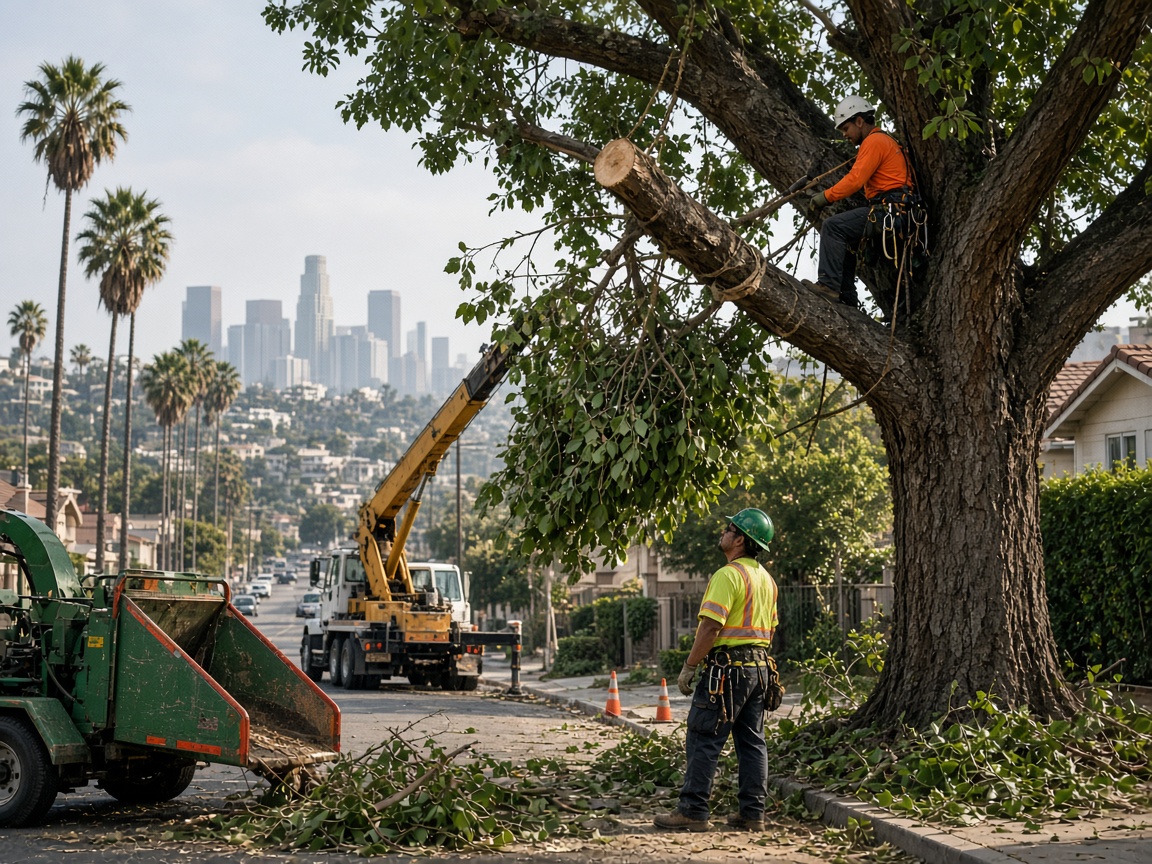
Lancaster trees live a hard life. The Antelope Valley’s constant wind, hot summers, freezing winter nights and alkaline soil stress everything that isn’t native. The trees we see most are Aleppo and Afghan pines, fruitless mulberries, Chinese elms, cottonwoods and tamarisk windbreaks on larger lots. Windstorms regularly snap pines at the top and uproot shallow-rooted trees. Our tree removal crews handle wind-damaged and dead trees on residential lots and larger ranch properties.
Fruitless mulberries are everywhere in Lancaster, and they need regular tree trimming to keep the dense canopy from catching wind like a sail. Avoid topping them — it causes weak, fast regrowth. Cottonwoods and elms planted near homes and septic systems often become removal candidates as their roots spread.
One Antelope Valley rule to know: western Joshua trees are protected under state law, and removal requires authorization from the California Department of Fish and Wildlife. We explain this and other rules in our permit guide. We also serve Palmdale and Santa Clarita.
Around Lancaster
We regularly work near:
- 📍Lancaster Boulevard (The BLVD)
- 📍Antelope Valley College
- 📍Apollo Community Regional Park
- 📍Lancaster Municipal Stadium
- 📍Prime Desert Woodland Preserve
- 📍Antelope Valley Fairgrounds
Tree Removal in Lancaster — Local Notes
- •High winds across the Antelope Valley cause frequent pine top-outs and uprooted trees.
- •Fruitless mulberries and Chinese elms are the most common yard trees and need regular thinning.
- •Western Joshua trees are state-protected — removal requires CDFW authorization.
- •Larger lots may have old tamarisk or cottonwood windbreaks that need removal or reduction.