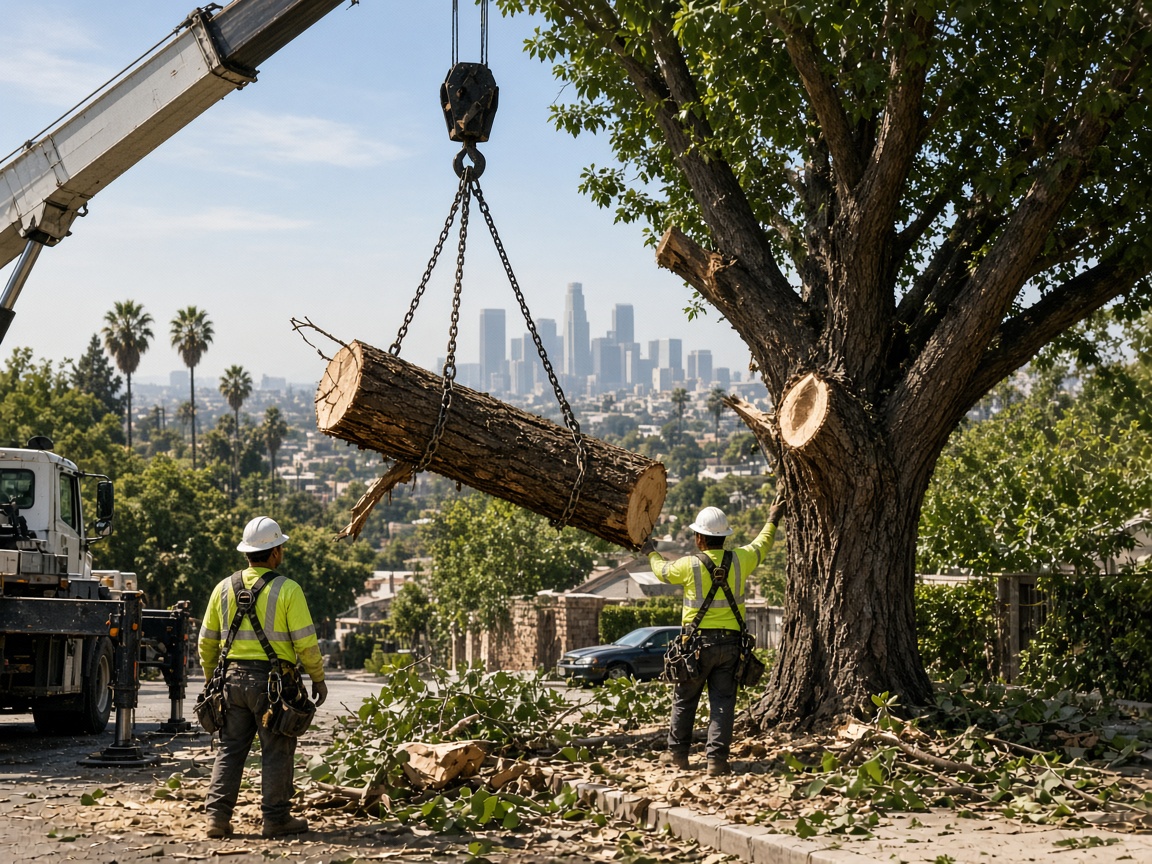
Long Beach homeowners live with palms. Mexican fan palms and queen palms line streets from Belmont Shore to Bixby Knolls, and backyard palms planted decades ago now tower over bungalows and Spanish-style homes. Dead frond skirts, falling seed pods and rats nesting in the crown are the calls we get most. We handle palm tree trimming without over-cutting live fronds, and we remove palms that have grown too tall to maintain.
Beyond palms, Long Beach neighborhoods like Los Cerritos, California Heights and Los Altos have mature ficus, Chinese elm, jacaranda and coral trees. Ficus roots are a constant issue here — they lift driveways and sidewalks and push into old clay sewer laterals. When a ficus has to go, we take it down in sections and grind the stump and surface roots so the damage doesn’t continue. Our guide to stump grinding vs stump removal explains when surface root work is worth it.
Near the water — Naples, the Peninsula, Belmont Heights — salt air and sandy soils make trees shallower-rooted and more prone to wind throw during winter storms. We also work in neighboring Lakewood, Carson and Bellflower. Parkway trees in Long Beach are city-maintained, so check with the city before removing any tree between the sidewalk and curb.
Around Long Beach
We regularly work near:
- 📍El Dorado Park
- 📍Rancho Los Cerritos
- 📍Recreation Park
- 📍Queen Mary
- 📍Bluff Park
- 📍Heartwell Park
Tree Removal in Long Beach — Local Notes
- •Palm trimming and palm removal are the most common calls across Long Beach.
- •Ficus roots in older neighborhoods frequently damage sidewalks, driveways and sewer laterals.
- •Sandy coastal soils near Naples and the Peninsula mean shallower roots and more wind throw in storms.
- •Parkway trees are owned and maintained by the City of Long Beach.