2026-09-21T20:01:24.747Z ·
Tree Removal Permits in Los Angeles County Explained
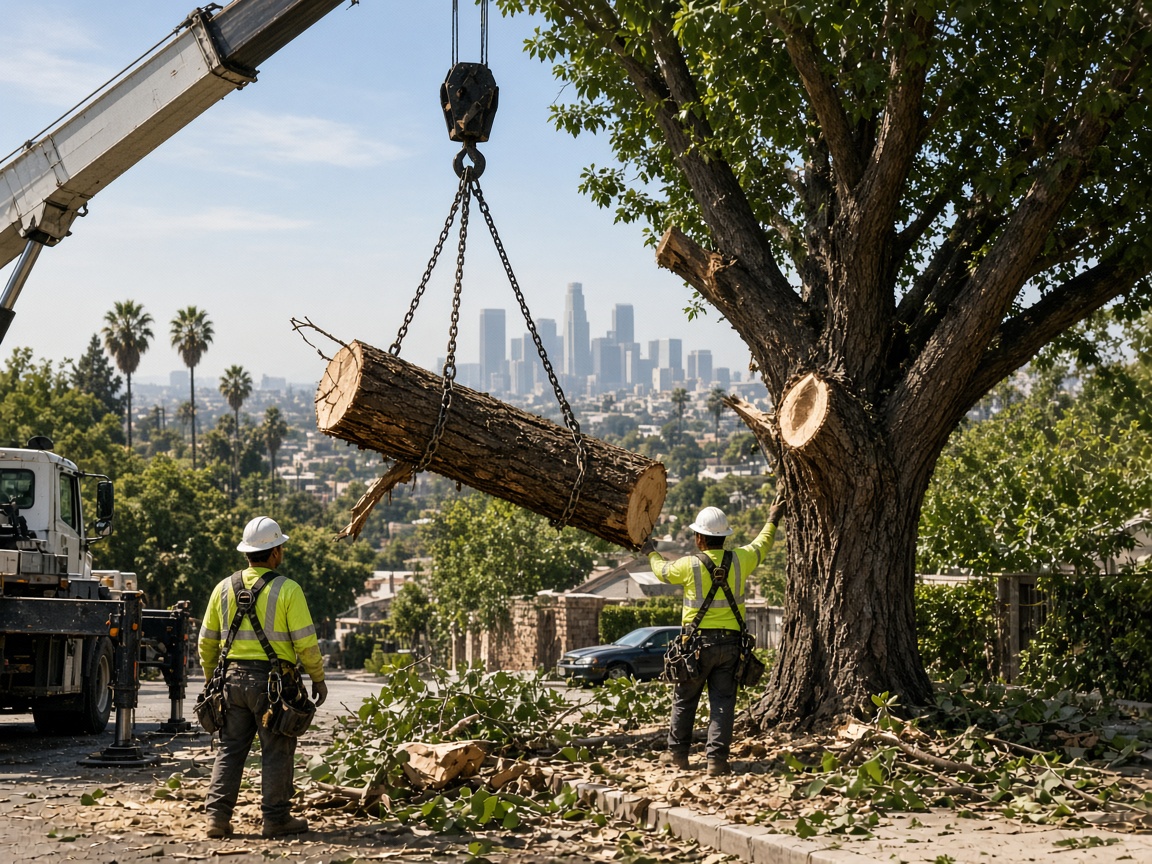
One of the most common questions we hear before a tree removal in LA County is simple: do I need a permit? The honest answer is that it depends on three things — the species, the size, and which jurisdiction the tree sits in. Los Angeles County has 88 incorporated cities plus unincorporated communities, and tree rules change at the city line. This guide covers the rules that affect most homeowners. Always confirm with your city before cutting.
City of Los Angeles: The Protected Tree Ordinance
Inside the City of Los Angeles — including Valley neighborhoods like Encino, Sherman Oaks and Woodland Hills — the Protected Tree and Shrub Ordinance covers native trees measuring 4 inches or more in diameter at 4.5 feet above the ground. Protected trees include:
- Oaks native to Southern California (excluding scrub oak)
- Western sycamore
- California bay
- Southern California black walnut
- Plus two native shrubs added in 2021: toyon and Mexican elderberry
Removing or relocating a protected tree on private property requires a permit through the Board of Public Works and StreetsLA’s Urban Forestry Division, and approved removals typically require replacement planting. The city also restricts heavy pruning that damages a protected tree. Penalties for unpermitted removal can include fines and required mitigation.
Parkway and Street Trees
The strip between the sidewalk and the curb is usually city right-of-way, even if you water and mow it. Trees there belong to the city. In the City of LA, removing or significantly pruning a street tree requires a permit from StreetsLA Urban Forestry; most other cities have a public works or urban forestry desk that handles the same requests. Homeowners are often surprised to learn that a ficus lifting their sidewalk is not theirs to cut down.
Unincorporated LA County: Oak Tree Permits
In unincorporated areas like Altadena, Topanga, Hacienda Heights, Rowland Heights and the Antelope Valley outside city limits, the county’s Oak Tree Permit ordinance (Title 22, Chapter 22.174) regulates oaks measuring at least 8 inches in diameter at 4.5 feet above grade, or with two trunks totaling 12 inches or more. Removing or encroaching into the protected zone around a regulated oak requires a permit from LA County Regional Planning.
Cities With Their Own Tree Ordinances
Many cities in the county protect trees on private property. Some examples to be aware of:
- Pasadena protects native, specimen and landmark trees through its Tree Protection Ordinance.
- Glendale regulates indigenous trees including native oaks, western sycamore and California bay.
- South Pasadena has one of the stricter private-tree ordinances in the county.
- Arcadia, Calabasas, Santa Clarita, Diamond Bar and Malibu protect native oaks and other natives, particularly on hillside and canyon lots.
- Rancho Palos Verdes has a view restoration ordinance that can also affect foliage decisions.
Thresholds and fees vary, so call your city’s planning or public works department with the address, species and trunk diameter before scheduling work.
Joshua Trees in the Antelope Valley
If you live in Lancaster, Palmdale or the surrounding high desert, western Joshua trees are protected under the state’s Western Joshua Tree Conservation Act. Removing one requires authorization through the California Department of Fish and Wildlife. Don’t assume a Joshua tree in your yard is yours to remove without that step.
Nesting Birds
Separate from permits, California law protects active bird nests. Before trimming or removing a tree between roughly February and August, the tree should be checked for active nests. If one is found, work may need to wait. This affects tree trimming timing as much as removal.
Dead or Hazardous Trees
Most cities have a faster path for trees that are dead or pose an imminent hazard, but they still usually want documentation — photos, an arborist letter, or a site visit — even for protected species. If a protected tree fails in a storm, photograph it before cleanup and contact the city.
Non-Protected Trees on Private Property
The good news: most common landscape trees in LA — Aleppo and Canary Island pines, eucalyptus, ficus, jacaranda, Chinese elm, queen and Mexican fan palms — are not protected on private property in most cities. For those, you can usually remove the tree without a permit as long as it is on your side of the property line and not in the parkway. HOA rules can still apply.
Next Steps
Measure the trunk circumference at chest height and divide by 3.14 to get the diameter, take photos, and note the species if you know it. When you call 877-552-8556, our crew will tell you if the tree looks regulated. For budgeting, including possible permit costs, see how much tree removal costs in Los Angeles. We work in Pasadena, Glendale, South Pasadena, Calabasas, Malibu and across the county.